Super Bowl, Mardi Gras, and Other Disappearing Acts
The week a city expects the world, the city starts editing the frame.
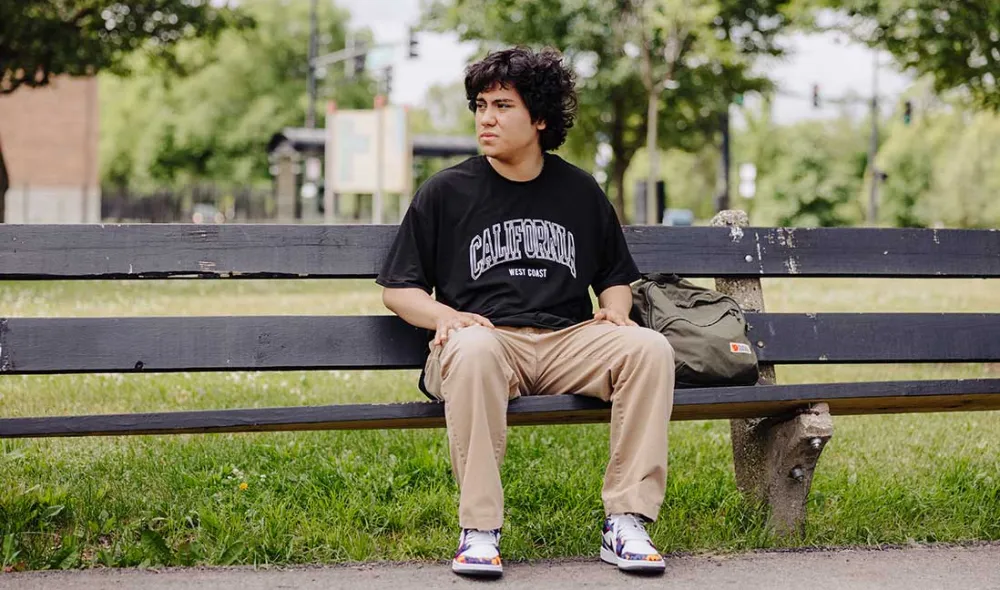
Barricades go up. Sidewalks get power washed. Tourist corridors become camera-ready. And in that rush to look “safe” and “clean,” the people living outside are often treated like clutter — moved along, fenced out, ticketed, or funneled into temporary arrangements that don’t follow the logic of stability so much as the logic of optics.
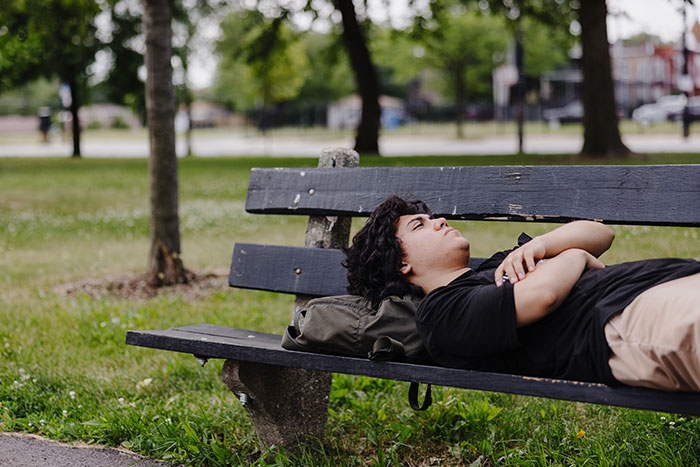
This isn’t new. But it is intensifying, especially after the U.S. Supreme Court’s 2024 Grants Pass decision, which made it easier for local governments to enforce public-camping bans without running into Eighth Amendment prohibition of cruel and unusual punishment.
For Covenant House sites operating in major metro areas, these “disappearing acts” not only change what streets look like, they also change who shows up at our doors, as well as when, how, and in what condition. They alter access routes, disrupt outreach patterns, and can swell demand for beds and services in ways that don’t fit neatly into a city’s event calendar.
In Super Bowl cities like New Orleans last year, and across the Bay Area this year, the pattern is visible: when the spotlight arrives, displacement tends to follow.
What “disappearing” looks like on the ground
City and state leaders often describe pre-event actions as public safety, sanitation, or connecting people to services. Sometimes those efforts include expanded shelter capacity. But advocates and on-the-ground providers regularly warn that the most common outcome of encampment clearings is not housing. It’s scattering.
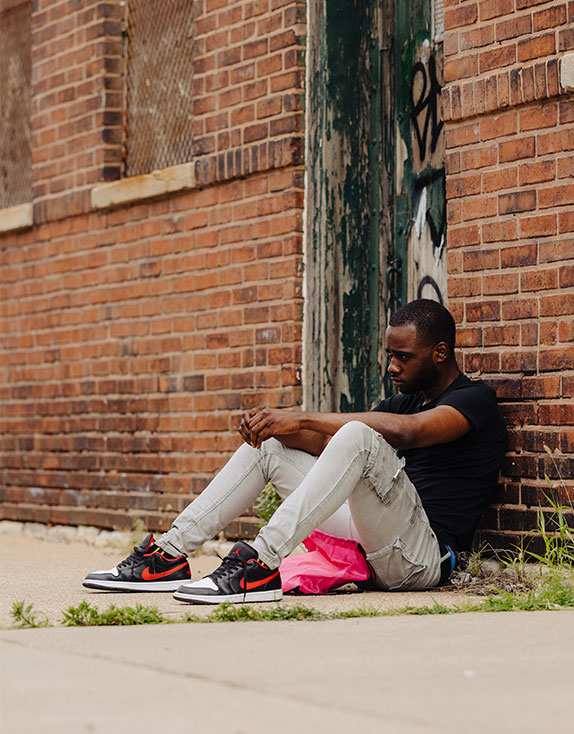
People lose contact with service providers. Medications and IDs get misplaced. Couples or friend –groups, where people keep each other safe, are separated. And folks don’t vanish, they migrate under overpasses, into industrial corridors, deeper into parks, and farther from clinics and drop-in centers.
For young people, this can be especially dangerous. Youth experiencing homelessness are already navigating high risks of exploitation, trafficking, and survival strategies that punish instability. When the city’s “clean-up” becomes a forced shuffle, safety fractures fast.
“Big events can make a city shine,” said Covenant House New Orleans CEO Rheneisha Robertson, “but they can also push our most vulnerable young people out of sight. At Covenant House New Orleans, we believe no young person should ever be treated as something to hide. Our mission is to meet them with dignity, safety, and unconditional love.”
New Orleans (Super Bowl LIX + Mardi Gras): “Move them out of the way”
In January 2025, ahead of Super Bowl LIX and Mardi Gras, Louisiana authorities cleared encampments in New Orleans and moved people to a warehouse-style temporary facility.
The city’s news outlets reported that the state set up a temporary shelter for roughly 170 people, tied directly to a push to relocate them from high-visibility areas near the French Quarter and Superdome. Local coverage described sweeps near key corridors and a newly opened transitional site.
The framing from officials emphasized urgency, security, and a “humane” alternative. The criticism from advocates emphasized coercion relocation under threat of enforcement, loss of belongings, destabilization, and a system built for a moment rather than the future.
And the effects didn’t end when the confetti fell. Local reporting later pointed to worsening tensions and broader spread of unsheltered homelessness after the sweep, with community concern that displacement simply redistributed the visibility of poverty without addressing the cause.
What that means for Covenant House
When large-scale sweeps happen, the pressure doesn’t always look like a single surge. Intake spikes after displacement. Youth show up later, with fewer belongings and more acute needs. The waitlists get longer because beds fill and turnover slows when housing pathways are disrupted. Outreach becomes more difficult when the young people staff know by name are suddenly scattered, and more crisis-driven engagement is needed when youth come in at the breaking point, not the early warning signs.
Santa Clara / Bay Area (Super Bowl LX): “The spotlight, the shuffle”
Super Bowl LX was held at Levi’s Stadium in Santa Clara on Feb. 8, 2026, with major “Super Bowl week” activity spread across the Bay Area.
In the days leading up to the game, reporting in the Bay Area has openly revisited the region’s history: high-profile events have often been accompanied by heightened enforcement and rapid cleanups in tourist-heavy zones.
One local news outlet reported that San Francisco helped expand shelter capacity during Super Bowl week, including supporting a program to operate 24 hours and hold additional beds, with some reserved specifically for people “dropped off” by police or city response teams.
For Covenant House California teams serving youth across the state (and in and around the Bay Area during major regional moments), the likely impacts mirror those in New Orleans, but in a region where housing costs, jurisdictional patchwork, and mobility already complicate everything.
“Large events like the Super Bowl can unintentionally disrupt the support systems youth rely on, from outreach and shelter access to the stability of encampments, underscoring the need for policies that protect, not displace, young people experiencing homelessness,” said Polly Williams, Covenant House California’s senior director of training and professional development, and the former director of programs at our Orange County shelter.
The cruel trick of these disappearing acts is that they let a city look solved for a weekend.
But homelessness is a condition produced by housing markets, wages, trauma, health, domestic violence, foster-care exits, and systems that run out of runway for young people. And youth homelessness is its own crisis — one that doesn’t pause for kickoff or parade season.
“The spotlight may be temporary, and so are many of the resources that come with it. But the need for safe shelter and support for young people never goes away. Covenant House depends on steady community investment to provide that stability every day of the year,” said Justin Daffron, Chief Development Officer at Covenant House New Orleans.
When enforcement accelerates without a real, stable housing pathway and lasting solutions to the homelessness crisis, the result is predictable.
That’s why Covenant House exists the way it does. A door that stays open, no matter what.
If a city is going to host the world, it has a choice: manage optics, or build safety that lasts.
The event playbook doesn’t have to default to displacement. When the cameras leave, there may still be remnants of good times. The trees in New Orleans may still hold the Mardi Gras beads thrown during parades. But the sidewalks in California won’t remember the commercials, the streets don’t keep the confetti, and the people who were pushed out of frame are still trying to survive in cities that demanded they disappear.
The question isn’t whether New Orleans or Santa Clara “cleaned up” for their big moments.
The question is who paid for that cleanliness, and what did it cost our young people?
Get news, stories, and insights delivered right to your inbox.
You Might Also Like...
All news & insights


Help Build Brighter Futures for our Youth
Your gift today provides services and support to young people on their journey toward sustainable independence and a hope-filled future.