What They Couldn't Take from Jasmine
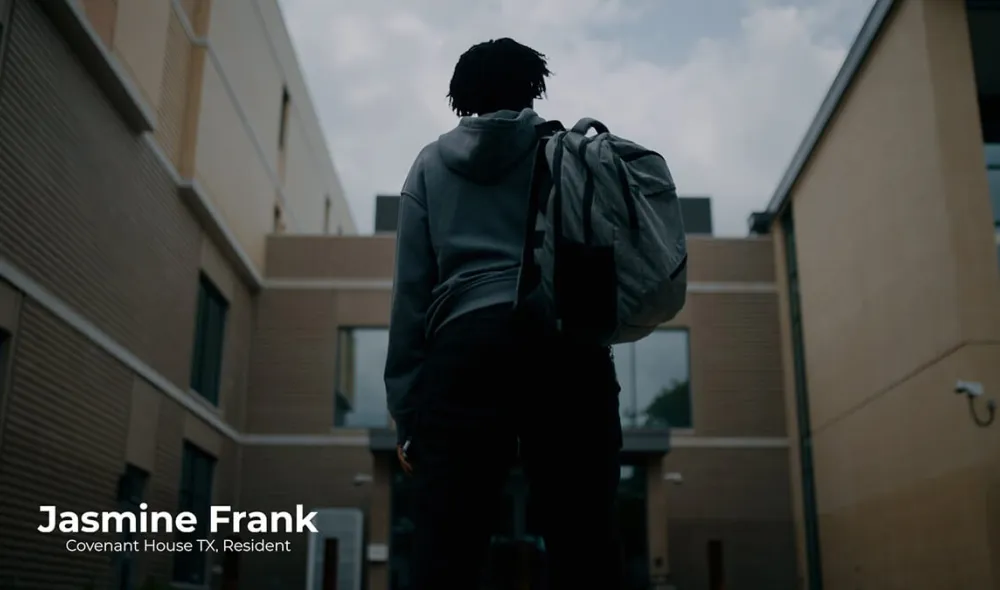
Before she describes any of what happened to her, Jasmine wants one thing understood: she doesn't cry when she tells it anymore.
"I used to cry. It used to be nothing but tears," she says. "But now it's liberation."
She's twenty-four. She has a way of leaning into a sentence when she's sure of it, and she's sure of this one. Before the worst night, her story started as a young woman who decided her life was hers to build.
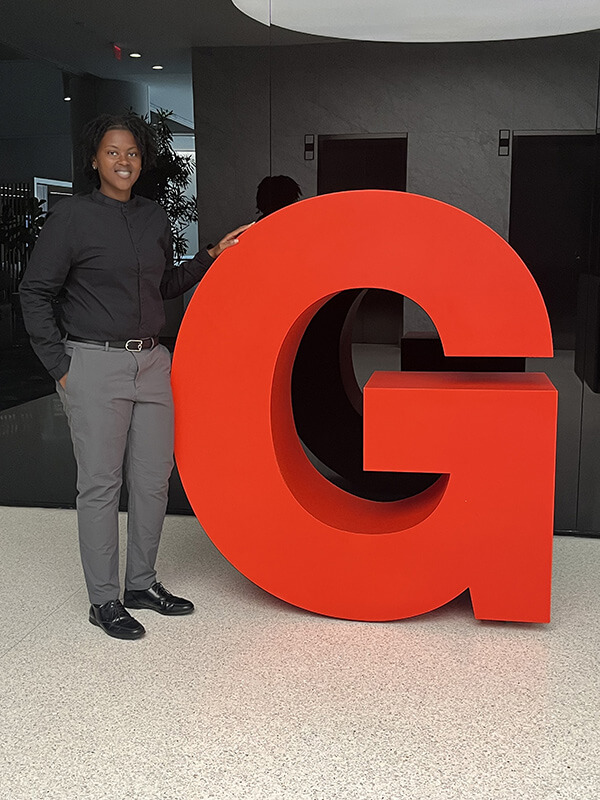
A dream she turned into a Greyhound ticket
Jasmine grew up in Arizona, born in North Carolina, the youngest of three with two older brothers she still gets on three-way calls with. For years she carried a single, stubborn idea around with her: Houston, Texas. She'd never seen it. She pictured horses and rodeos and wasn't entirely wrong, but what pulled at her was bigger than scenery. It was the feeling of a place where a young Black woman could build something and be seen doing it.
"I want to go to Texas. I want to live there," she'd tell herself, over and over, until one day the wanting tipped into a question she couldn't argue with: "What would it hurt? Why would that be something that I couldn't do?"
So, she did it. She found an apartment locator while she was still in Arizona, sent her deposit, and one day climbed onto a Greyhound and rode it all the way to Houston. She'd just turned twenty-two. "This is crazy," she remembers thinking, "but this is exciting, because I'm so young and I have the opportunity to make those decisions for myself."
That's the thing about Jasmine worth holding onto. The decision was the point. Not the apartment, not the city, but the proof that she could choose her own life and go get it.
The first stretch was hard. Work was tough to find, and she lost the apartment. She went to stay with her brother in Indiana to get back on her feet, and while she was there, she got a car. "A beautiful car," she says. And it wasn't really about the car either. It was the same proof, in a new form. Look what I did. Look how far I got on my own.
Then she made another choice that was entirely hers. She drove eighteen hours back to Houston, not because she had it all figured out, but because Houston was where she intended to change her life. She didn't come back stable. She came back with a car and a plan to live in it until she could afford an apartment again. "This is the place where I want to start my businesses and network with people," she says, "and just shine my light."
Five days
She'd been back in Houston five days.
She was working. DoorDashing, the same as any other night, "putting money up, putting it up, putting it up." It was a Saturday, around eight o'clock, and she'd pulled up to a McDonald's to grab an order. She noticed some young men standing nearby but didn't think much of it. She was working. She had places to be.
She came back out to her car, parked right in front, and it happened.
"You have three people on you at once," she says. "One's grabbing your phone, the other one's grabbing your keys out of your pocket, and the third one jumps in the driver's seat. You're bombarded from every angle."
There was a gun pointed at her. There was no time to think. And in that no-time, one thought arrived whole: Is it really worth it?
She let the car go.
What she lost in those few seconds wasn't only a car. "Everything I had owned was in my car," she says. Her suitcase of clothes. Her birth certificate. Her ID. Her little backpack. Her entire life, packed into the one thing she'd managed to hold onto.
And her mother's ashes.
What she was protecting
Jasmine's mother passed away when Jasmine was twenty-one. Recent enough that the grief is still close to the surface, old enough that Jasmine has had to learn how to carry it. After her mother died, she says, "it was my turn to step up." The ashes traveled with her. Arizona to Indiana, Indiana back to Houston, eighteen hours each way. Through every move, through living in her car, her mother rode with her.
"At the time, she was my baby," Jasmine says. "She was what I was protecting."
When she talks about the moment, she says she understood the ashes were gone with the car. "It felt like I was stripped of everything."
The car was eventually found. But the doors were locked, the key fob was gone, and what followed was its own slow cruelty. Pay to unlock it, pay to get it out of the pound as the days—and the cost—racked up, pay to tow it to Nissan for a new fob. All of it landing right after she'd made her monthly car payment, all of it money she didn't have. For five straight days she tried to claw it back. "I tried so hard to get my car back," she says. "But I had to accept it. It's done. It's over."
She never recovered the things inside. She never recovered the ashes.
Sit with that for a second, because Jasmine has had to.
How she carries her mother now
Here is where Jasmine says she knows most stories about a young person and a loss like this would end, on the wound, with a handout. But she won't let hers end there, because what she did next is the truest thing about her.
She didn't get the ashes back. So, she found another way to keep her mother.
"I talk to her," Jasmine says. "I celebrate her birthday." She catches herself in small, involuntary moments like flashes of what she calls “goofiness,” and stops cold.
I say to myself, “Oh my gosh, I'm just like her. OK, hi Mom."
Her mother isn't in a container that can be taken at gunpoint. She's in Jasmine's laugh.
"She's living through me," she said.
And she refuses to let the robbery be the headline of her own life. "All it takes is one event to change everything," she says. But she turns even that toward grace. The experience grew something in her, "another level of compassion, relatability. To see people not for the things that happened to them, but for the way they responded. The fact that you got back up on your feet and said, this is not the end."
She could easily be describing herself.
"I need help"
After the gun was lowered and the car pulled off, Jasmine's very next move shows her clarity under pressure. She didn't freeze. She said, out loud, "I need help," she borrowed the phone of a nearby witness, and started making calls. First to the police, then to a friend in Dallas who couldn't get to her but talked her through the night, covered the cost of a hotel room, and sent additional funds later.
Jasmine reached for the next hand, and the one after that.
Eventually one of those reaches led her to a phone number, a 211 search, and a name: Covenant House. What sold her was a single detail that the Houston program serves young people aged eighteen to twenty-four.
"I knew I would be with my peers," she says. "Like-minded youth that something just happened to, and now they're here trying to figure it out."
She came the very next day.
She remembers walking in. Asked to think in five senses, what she reached for first wasn't a smell or a sound, but a feeling. "I hear you. I see you. It's okay." The staff cracked jokes with her. "It was homey. It didn't have to be so serious." She'd braced for judgment and found the opposite. "I wasn't the only one. Sometimes you feel like you're the only one in the world going through crazy stuff."
She thinks about the name of one of the programs — Safe Haven — and lands on it exactly. "Down to the T, literally, this is a safe haven. You made it to the other side. Welcome in. We're not going to talk to you like you did something wrong. We're going to speak to you from a perspective of 'Well, what's next?'"
What's next?
For Jasmine, that question wasn't a burden. It was an invitation.
What's next
Ask Jasmine what she's doing now, and the list runs long.
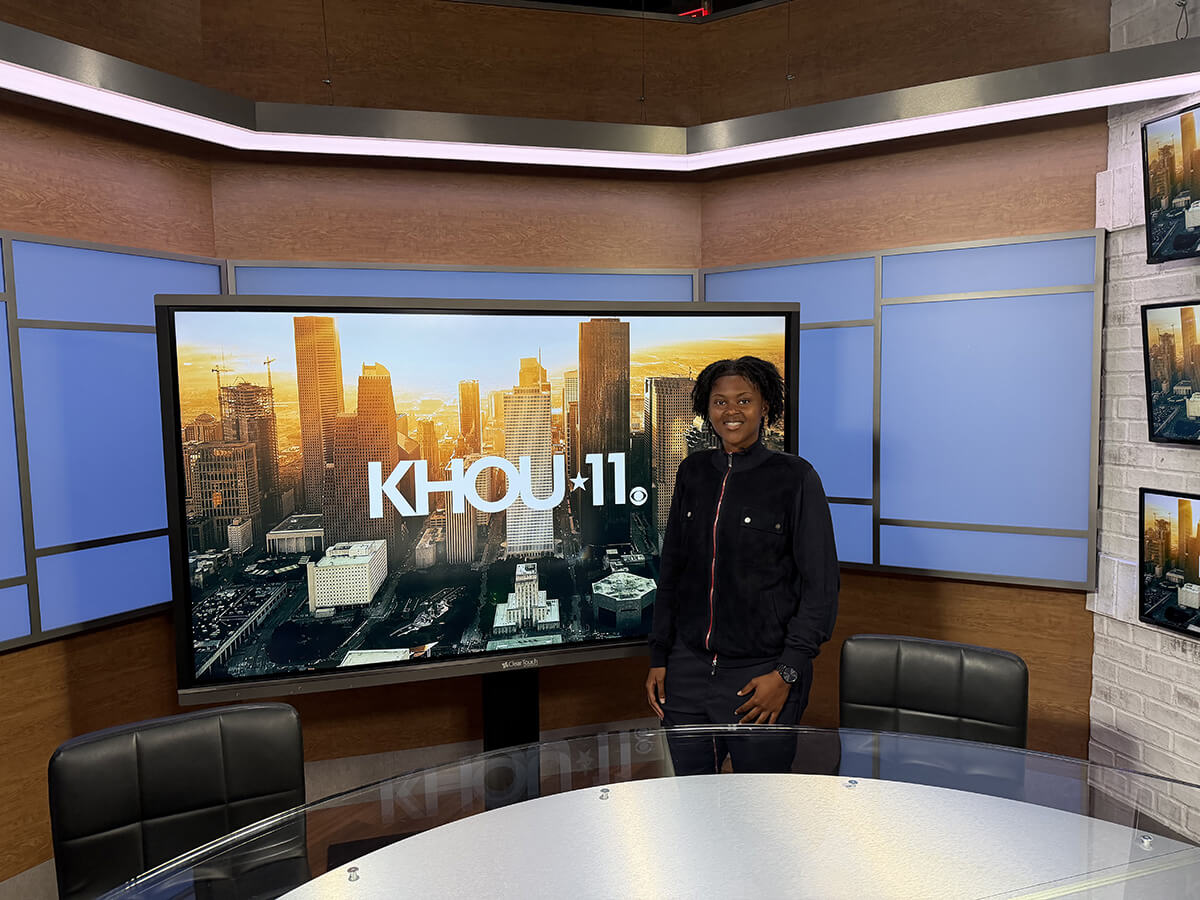
She's an administrative assistant intern at the Houston Clubhouse. She's just been hired for a guest services role at a downtown law firm. She's a Houston Community College student studying business and economic development, on track to graduate in summer 2027. She's spoken on panels, told her story on local television, and started building what she calls her catalog.
Jasmine has realized that the businesses she dreamed about in Arizona are no longer just dreams. Public speaking. Motivational speaking. Music. Video. All of it under one brand, all of it in service of the same thing.
"It all ties into me telling my story," she says. "I'm victorious within my story."
She's deliberate about why that matters. She's the oldest youth in her program at Covenant House Texas, and with no younger siblings of her own, she's decided that makes her responsible for something. "I take my peers seriously. I want to be somebody that changes their mind."
She talks about setting the tone, and about how people don't know what's possible until they see it standing in front of them. "How would we know what something could become if we never see it?"
She's surrounded by women she's learning from, business owners who sit down and teach her how their work happens, and she can't help but turn around and reflect that back to the young people coming up behind her. She has decided, out loud, that she will be the proof.
What the work makes possible
Jasmine made it to our door on her own determination. What Covenant House does is meet that determination with something solid to stand on.
A safe place among peers her own age, on the night she needed it. Programs to finish and a clubhouse to intern in. A career center, a clinic, therapy to "unpack all of that luggage and all of that trauma." Panels and rooms and stages where a young woman with a story can practice telling it on her own terms.
This is the work in Houston, and it's the work across the Covenant House federation, in cities throughout the United States and in communities in Canada and Latin America, where young people arrive carrying losses of their own and a determination that deserves to be met. Jasmine is one young woman. She stands for thousands.
The work doesn't save Jasmine. Jasmine is already saving Jasmine. What it offers is the floor under her feet while she does it and an open door for the next young person who shows up five days into a new life, having lost almost everything, and says the three words that change everything: I need help.