Remi Transitions to Independence at Covenant House
As a child, Remi wrote short stories and poetry, her “escape from the world,” she says. Today, though, having recently exited Covenant House Greater Washington’s transitional housing program for an apartment of her own, she’s eager to take on the world and embrace her independence.
“It’s been a long time coming, but it’s finally happening. I’m excited!” says Remi.
CHGW’s transitional housing program is called Rights of Passage, or ROP. Here, youth live for up to two years. While they learn life skills like financial literacy and how to prepare nutritious meals, they can finish high school, enroll in college or trade school, find work, save money, and gain invaluable training in a career pathway that promises security and stability.
During her two years in ROP, Remi says she learned how to grow into independence in much the same way that her brothers taught her to ride a bike. “At some point, they had to let go, so I could finally learn how to ride on my own. It’s kinda like that,” she says.
The move into ROP was itself a big transition, she says, from the emergency shelter where Remi first found Covenant House after the death of her grandmother, her guardian. “I remember my first day here. I was very nervous,” she says.
“Before you come into ROP,” she continues, “they’ll hold your hand, but when you’re finally in, you let go. It’s like, okay, here we are. This is your next step. And you just let your hand go,” she says. “Everything’s very independent. You’re basically being an adult at this point, and you’re learning to figure out things on your own.”
Transitional Housing: On Your Own, But Not Alone
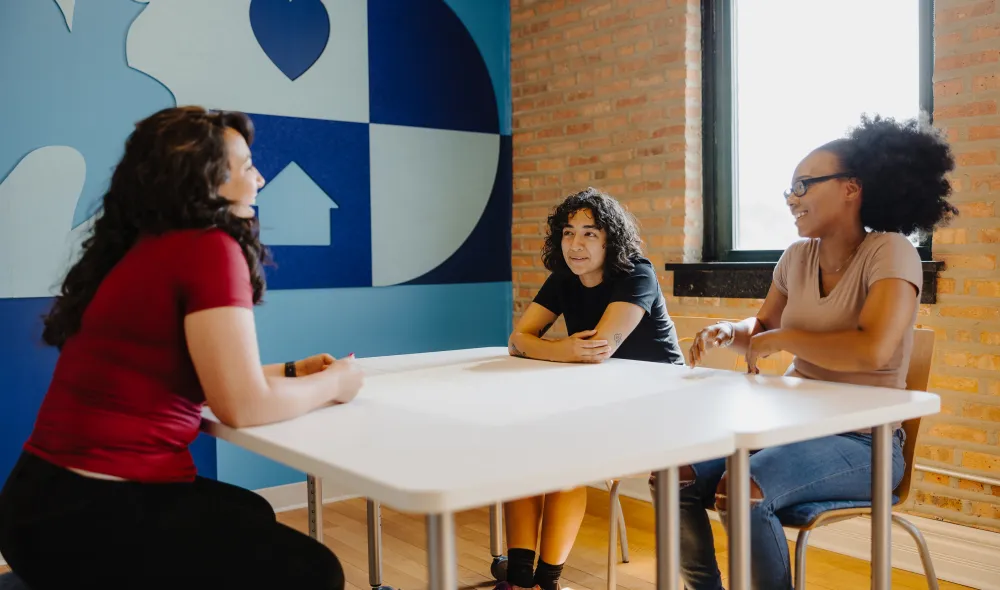
Youth, like Remi, in ROP are on their own to get themselves up for school or work, acquire and prepare food for meals, and keep their clothes and space clean and organized. But they are never really alone, thanks to the committed Covenant House case managers and youth engagement staff, who are always there to offer guidance, support, and encouragement.
“The real helpful part is having someone to go to when you need some kind of assistance,” Remi says.
Her go-to staff person was Antonio Jenkins, her case manager, who supported her in every way and saw her through her studies to become a certified nursing assistant.

“My case manager helped me find the program; get admitted to it; he made sure I stayed on top of my classes; made sure I studied; and made sure I was able to get back and forth during my clinic week,” Remi says.
“I had someone I could always talk to if I was having problems, whether that was academically or whether it was me letting out the frustrations I was having at work or with learning in general,” she says. “There were some points where I just didn’t understand the subjects, so I would ask him where I can go to get extra help.”
That continuous support helped Remi dig deep into herself to draw on the strength her case manager knew was there. She says, “He was very proud of me. I showed him my scrubs; I showed him my books and my course load. Then, at the end, when I got my certificate, I could show proof that I did this. This is something I accomplished. And my case managers were proud of me.”
And that’s because the CHGW case managers and youth engagement specialists work together to relentlessly support our young people as the youth push themselves to overcome homelessness and build stability for the rest of their lives.
Life Lessons and Moving Forward
Ms. Kendra, “We sometimes called her Ms. K,” Remi says, is a youth engagement specialist Remi bonded with and relied on for support and those deep conversations every young person wants to have with a caring adult when they’re working out their life plan.
On Wednesday evenings, some of the youth would meet with Ms. K for “Life Lessons,” Remi says. “It might be about learning how to cook or something else, and she’ll ask us, ‘Where do you see yourselves in five years?’ or ‘What are some of your goals?’ or ‘What does empathy or courage mean to you?’ And we’d all add our input.”
Ms. K would also hang up posters about work and CHGW training opportunities for the youth to consider, like the CNA career path Remi joined. “It actually helps because some of us, when we first come here, we don’t know what we want to do, or we might have an idea of what we want to do, but we don’t know where to start. Those posters and job postings helped me find what I wanted to do.”
Remi’s ultimate goal is to become a data scientist, but her CNA certificate is an invaluable tool right now to help her get settled in her new place. She’s looking for a position that is full time, long term, and has benefits because, she says, “I want more for myself.”
At Covenant House Greater Washington, transitional housing is a critical step toward helping Remi and all our youth achieve just that.
Get news, stories, and insights delivered right to your inbox.
You Might Also Like...
All news & insights


Help Build Brighter Futures for our Youth
Your gift today provides services and support to young people on their journey toward sustainable independence and a hope-filled future.