What’s Next for Me?
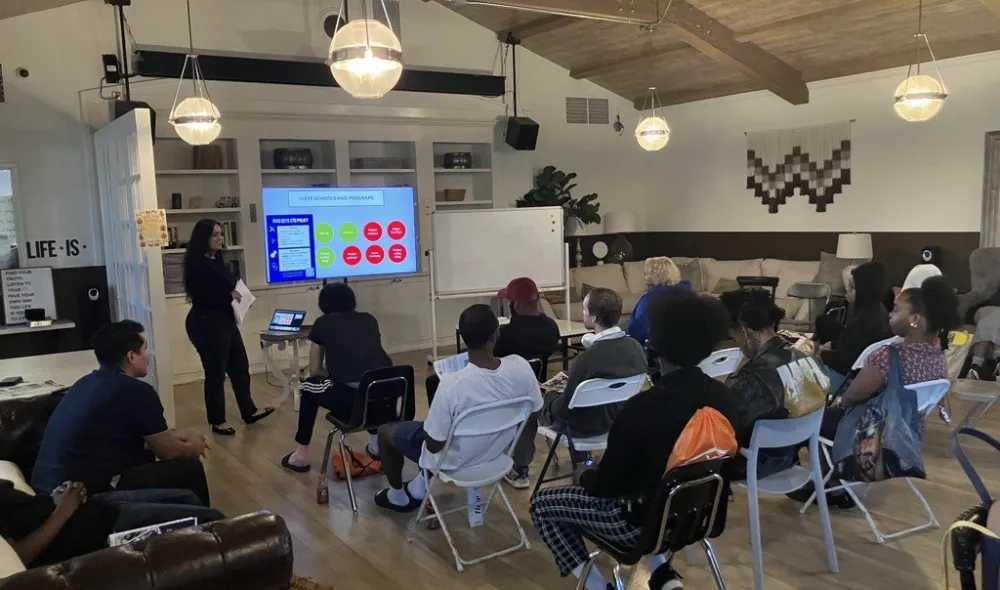
“What’s next for me?”
That’s the question on the mind of a healthy and confident young person exiting homelessness as she gazes out, perhaps for the first time, on a horizon of possibilities that she now knows is attainable.
At Covenant House California, mental health and workforce development staff hope to hear more youth asking that question, as CHC doubles down on a holistic strategy to support young people facing homelessness to attain the stability that ensures sustainable independence.
“Having a place, getting an apartment is very crucial, but it’s a piece of a very complicated puzzle,” says Dr. Daniel Ballin, LCSW, director of clinical services at CHC, “because it’s not enough just to move into an apartment. It’s what do I do once I’m there.”
Ensuring stability, he says, means housing plus employment, a career path, and stable mental health. CHC’s holistic approach connects these areas and more to support each young person’s successful journey to wholeness and home.
An Evidence-based Strategy
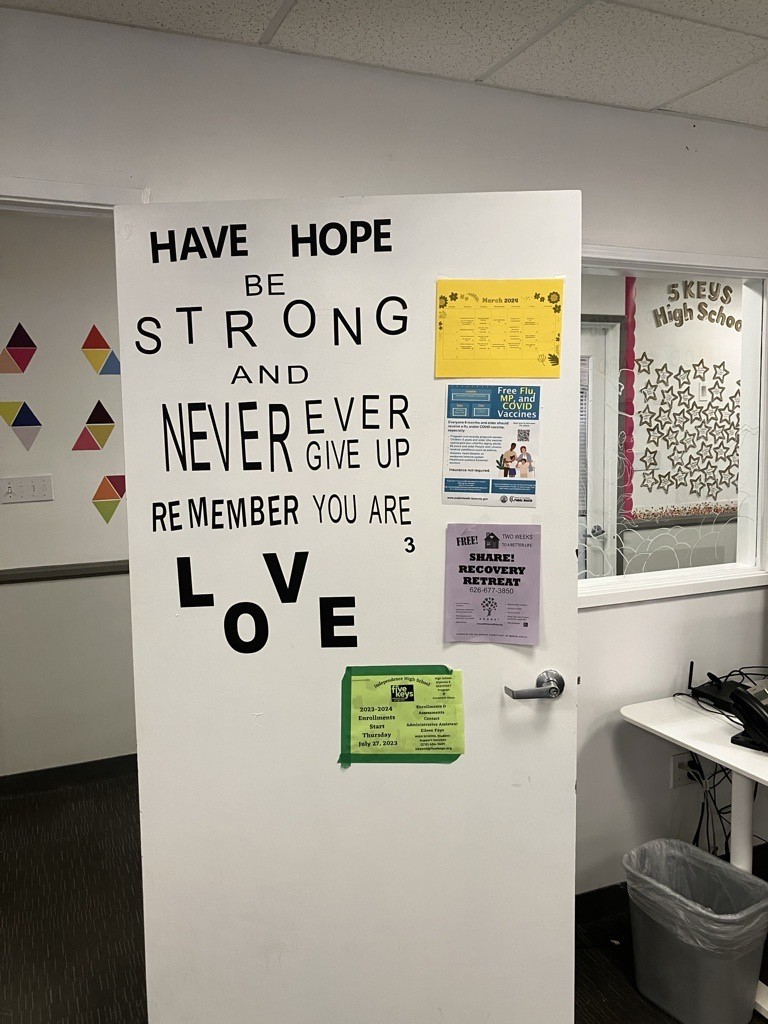
“It’s all related to the person, the whole person, and not just a part of the person,” Dr. Daniel says.
“One of the biggest ways we perpetuate systemic barriers,” adds CHC Workforce Development Director Yelena Litvak, “is by not approaching homelessness holistically.”
Studies show, she says, that it is possible to support young people to maintain stability, but when key touchpoints like work, education, and mental healthcare are not in place, it undermines their success.
“By taking a holistic, intersectional approach, we essentially create the scaffolding for our youth to build the resilience they need to have that confidence and maintain that stability independent of the program,” Yelena says.
How does it work?
The CHC Support Center, in Hollywood, houses a range of programs, such as mental healthcare, legal aid, and education, employment, and vocational supports, and it’s open to all youth ages 18 to 24, regardless of whether they’re a CHC resident. And it remains open to youth who have exited our program and are now considered CHC alumni, including residents of our affordable-for-youth housing programs, Linden Commons and Olive Tree Commons.
“We start from the moment a youth comes in with a referral to us,” Yelena explains. “We take them on a tour of the campus, so they have that experience and can visualize and go through the journey of the resources that are available to them.”
This empowers youth to connect with the resources they need. It makes those resources “very tangible” from the start, Yelena says.
From there on, it’s all about the “relentless engagement” of the CHC staff, Dr. Daniel says. The case manager is the “hub,” he notes, around which practitioners of the various resources and disciplines stand ready to connect with each youth — and each other — to support that youth according to their needs.
“We have this beautiful feedback loop between our career center and our clinical team. We’re sharing resources with the youth who are utilizing services at the career center as well as connecting youth to mental health resources in that partnership,” Yelena says.
Doubling Down on an Approach that Works
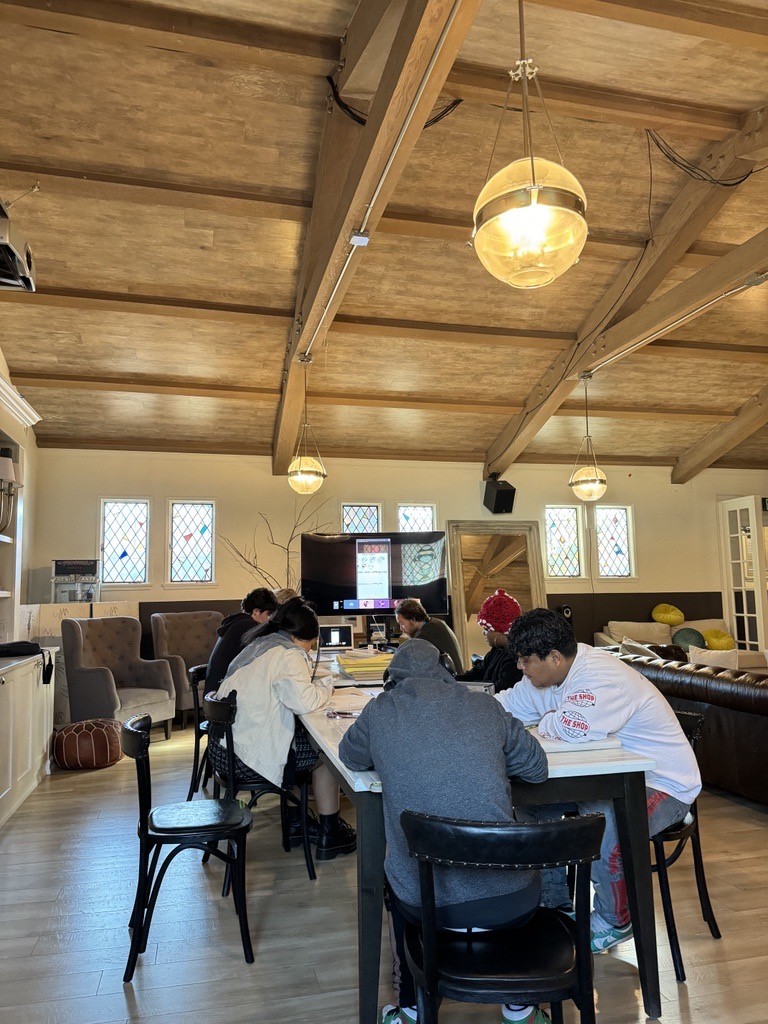
Over the past year, critical funding has made it possible to advance the holistic approach to supporting youth facing homelessness and, particularly, bolster the connectivity between the career center and clinical services.
Yelena herself came to CHC in this period. “She brought a lot of new energy and ideas, resources and connections,” Dr. Daniel says. “That has helped tremendously.”
As did the hire of a full-time therapist to “help bridge the mental health-education-employment gap,” he adds. Plus, he says, “right now, we have eight interns from master’s degree programs in counseling and social work to support our efforts.”
One of the interns was placed in the CHC Support Center, where he counseled young people on career choices and job opportunities and helped create a job readiness curriculum.
“Because we’re able to work so fluidly,” Yelena says, “we’re able, also, to inspire one another and fill in gaps and needs and share ideas.
“Something that came out of working collaboratively, and with Dr. Daniel’s interns, is a plan to build an anger management curriculum and a class on parenting and domestic violence, available to all youth,” she says. It will be, like all our services, free of charge.
But the real measure of the success of CHC’s holistic approach is in the young people whose lives are impacted by it, who can take their lives in new directions and ask, with joy and anticipation, “What’s next for me?”
Get news, stories, and insights delivered right to your inbox.
You Might Also Like...
All news & insights
Help Build Brighter Futures for our Youth
Your gift today provides services and support to young people on their journey toward sustainable independence and a hope-filled future.