Youth Mental Health First Aid Grows Across Covenant House
Over the course of a young person’s stay at Covenant House, they build relationships with many different adults, from the case manager they meet with during the day to the team member who checks in overnight. Mental health and substance use challenges can come up at any point in a young person’s time with us, and that's why we want staff members in every role and on every shift to know how to notice when something is wrong and what to do next. Youth Mental Health First Aid has become an important part of how we train our teams to do that.
Youth Mental Health First Aid (YMHFA) is a skills-based training that teaches adults who work with young people how to recognize, understand, and respond to signs of mental health or substance use challenges. Last year, 57% of youth across our sites in the U.S. and Canada reported they were dealing with a mental health challenge. Participants in the training learn a five-step action plan for supporting a young person in both crisis and non-crisis situations.
Four instructors from our Covenant House International headquarters have spent the past few years traveling to our sites and teaching the eight-hour YMHFA course to staff in person. Now they are also co-teaching with new site instructors, who need to lead three classes a year to stay certified. We now have 16 trained site instructors across our U.S. and Canadian sites.
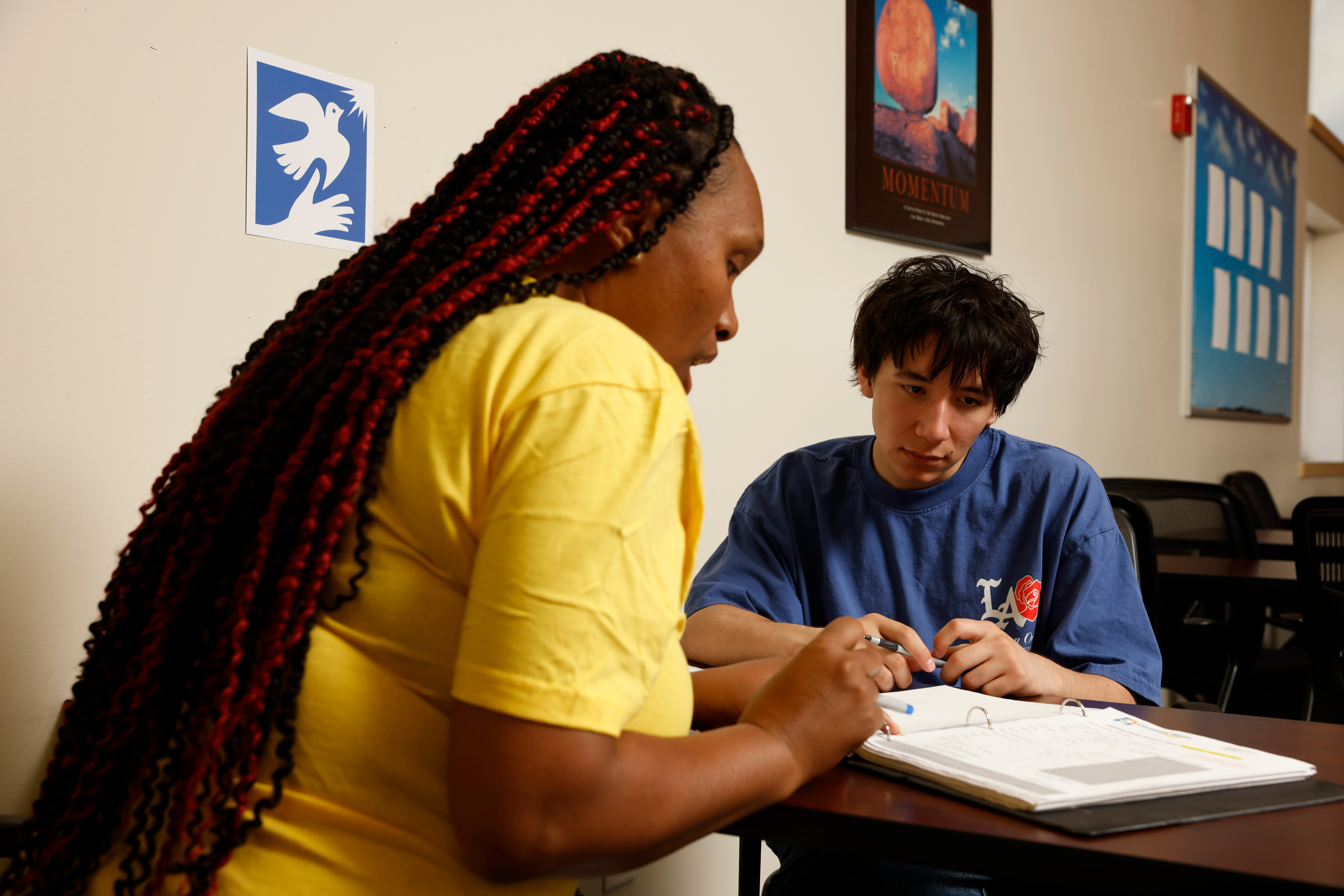
CHI instructors have trained 398 Covenant House staff members, with 13 of 15 affiliates in the U.S. and Canada now having sent staff through the course. Our site instructors have also been busy locally, and they report training about 212 more staff at their own sites through fiscal year 2026.
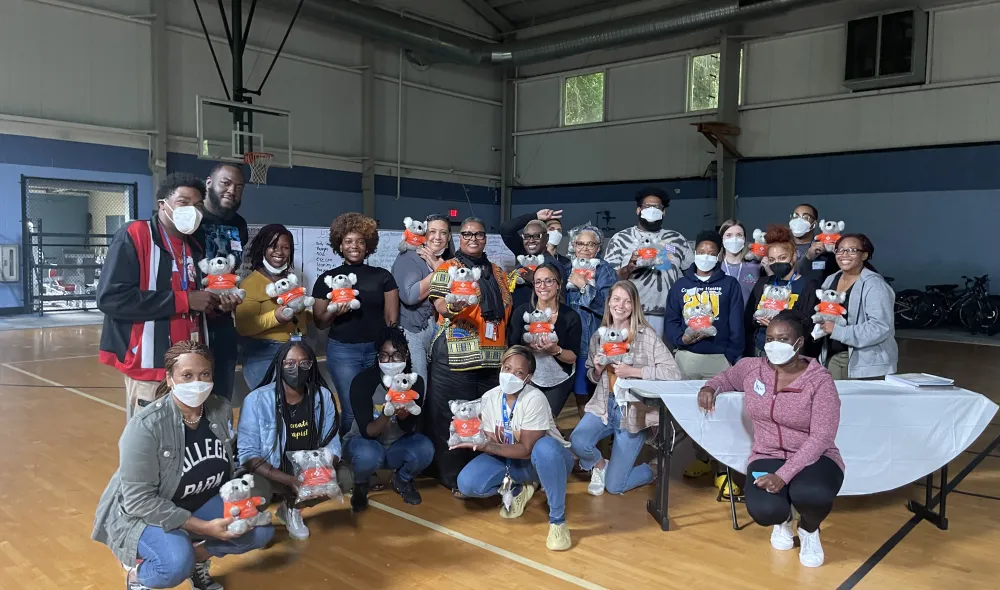
At the end of a CHI-led in-person course, our trainers distribute stuffed koala bears to staff participants, a nod to YMHFA's Australian roots. The koala is called ALGEE, after the five-step action plan staff learn in the course:
-
Approach, assess for risk of suicide or harm, and assist.
-
Listen nonjudgmentally.
-
Give support and information.
-
Encourage appropriate professional help.
-
Encourage self-help and other support strategies.
A big reason we have reached so many staff is that CHI has begun providing YMHFA courses virtually. Our trainers no longer have to travel to a given city for staff to take part, so a youth worker in one state can sit in the same class as a colleague on the other side of the country. Participants get to learn from each other’s sites, and our instructors spend their time teaching instead of traveling.
What participants tell us
After taking a CHI-led course, participants answer the same survey questions they answered before it began. The share who strongly agreed they could have a supportive conversation with a young person about mental health or substance use challenges went from 47% to 72%.
The change that stands out most to us is in the toughest situations. Before the course, 38% of participants strongly agreed they could respond to a substance use crisis, including an overdose, and know what to do to keep a young person safe. After the course, 61% did. And 86% said they were extremely likely to use the YMHFA action plan to connect a young person to help, up from 59%.
When we asked participants what was most helpful, the five-step action plan came up more than anything else. Staff also pointed to the breakout sessions, where they practiced real scenarios and heard how colleagues approach them. Many said the examples felt true to the young people they work with every day, and one participant noted that taking the course alongside staff from other sites made the experience even stronger.
“I feel more equipped and prepared to tackle some of the challenges that might arise in my current work,” said one participant from Covenant House Florida.
“This provided the space and opportunity to give an incorrect answer and listen to how to better approach serious situations with the community of individuals that we serve,” a trainee at Covenant House New Jersey added.
A staff member who feels ready is more likely to notice when something is wrong and more likely to speak up and stay calm. Young people who have been through a lot deserve adults who are prepared to meet them where they are.
We will keep training new site instructors and continue providing virtual classes to more sites. Every person who completes the course is one more person who can offer absolute respect and unconditional love in a way a young person can feel.
__________
This blog was written by Covenant House International Programs Director Kristina Otten.
Explore how Covenant House supports young people's physical and mental health.
Get news, stories, and insights delivered right to your inbox.
You Might Also Like...
All news & insights


Help Build Brighter Futures for Our Youth
Your gift today provides services and support to young people on their journey toward sustainable independence and a hope-filled future.